How to Prevent Burnout: 7 Habits That Actually Work
Entrepreneur.com has recently reported that 1 in 2 founders experience and wonder how to prevent burnout.
If you’re a high-performing professional, that number probably doesn’t shock you. You might not run a startup, but you have likely felt the same pull: the drive to keep delivering, achieving, and holding everything together. Even when you love your work, a quiet question can appear in the back of your mind: how much longer can I keep this up?
“In a 2024 survey, a staggering 53% of founders reported experiencing burnout — showing that exhaustion isn’t just common, it’s pervasive in startup life.”
Burnout is not a failure. It is feedback. Your body and mind are simply asking for a new way to work before they force you to stop. The good news is that preventing burnout does not require a total life overhaul.
This is not another story about how to prevent burnout by quitting your job or moving to Bali (although I did do exactly that when I burned out myself :P). It is a practical, grounded guide to seven habits that help you protect your energy and performance in the real world.
And yes, it is completely possible to burn out from trying too hard not to burn out.
So let’s keep it simple. Start with three critical habits that make the biggest difference, then layer in the next four over time. Small steps are enough to keep you steady, focused, and well.

The Three Realities of Burnout (and Why It Sneaks Up on You)
Burnout rarely arrives with warning lights. It builds quietly, often in people who care deeply and want to do things well. It starts as tiredness, turns into tension, and eventually becomes a sense of running on empty no matter how much you rest.
The truth is that burnout is not only about workload, sometimes not at all. It is about how the nervous system responds to prolonged stress, uncertainty, and pressure. It’s also about your sense of purpose. Here are three simple realities that explain why it can happen to anyone, even the most capable people.
Burnout exists on a spectrum
It is not a switch that suddenly flips. You can be functioning on the outside while running low inside. Many people spend months in a state of “almost burnout,” where energy never fully recovers between demands. Recognising this early is not self-indulgent. It is intelligent self-leadership.
High performers are most at risk
Drive and discipline often mask depletion. When your standards are high, you push through signals of fatigue because you believe you can handle it. But over time, the same qualities that create success can work against your wellbeing if they are not balanced with recovery.
Your nervous system sets the pace
No amount of motivation can override biology. When your stress response stays active for too long, focus, patience, and creativity all begin to fade. Learning to regulate your energy is not about slowing down. It is about finding the rhythm that allows you to sustain high performance without collapse.
Prevention is self-leadership, not luxury
Taking care of your energy is not indulgent. It is strategic. The most effective leaders are those who know how to recover, reset, and recalibrate before they reach breaking point. Burnout prevention is not a reward you earn after success. It is the foundation that makes success sustainable.
Once you see burnout as a leadership and performance issue, not a personal flaw, the habits that follow begin to make sense… and they actually work.
How to Prevent Burnout: The 7 Habits That Protect You
“It is entirely possible to burn out from trying to implement too much self-care, all at once. It’s more common than you think.”
About 3/4 of my clients are wondering how to prevent burnout. These seven habits come directly from the work I do with clients who want to protect their energy and performance in a sustainable way. Each one supports the nervous system, improves focus, and helps you build resilience instead of running on adrenaline.
But here is the key: start small.
The first three are the critical habits. They are the foundation that everything else rests on, and they make the biggest difference when you are trying to recover or prevent burnout. Once these are in place, you can layer in the next four habits gradually.
Trying to do everything at once is a fast track to the very thing you are trying to avoid. You can, in fact, burn out from trying too hard not to burn out.
Critical Habits: Start Here
First, define or refine your purpose - the 3 MIQs – Most Important Questions
The 3 MIQs is a visionary life design exercise created by Vishen Lakhiani. It helps people move beyond traditional “means goals” like get a promotion or earn more money, and instead design a life based on three deeper drivers: experiences, growth, and contribution.
This practice reframes goal setting from a chasing mindset (“I’ll be happy when…”) to a way of living built around what truly fulfills you. Many people discover that burnout comes not only from overwork, but from working toward goals that no longer feel meaningful. The MIQs bring that clarity back.
How to use it:
Set a timer for 90 seconds per question.
Write freely — do not overthink.
Ask yourself:
What do I want to experience in life?
How do I want to grow and develop myself?
How do I want to contribute to the world?
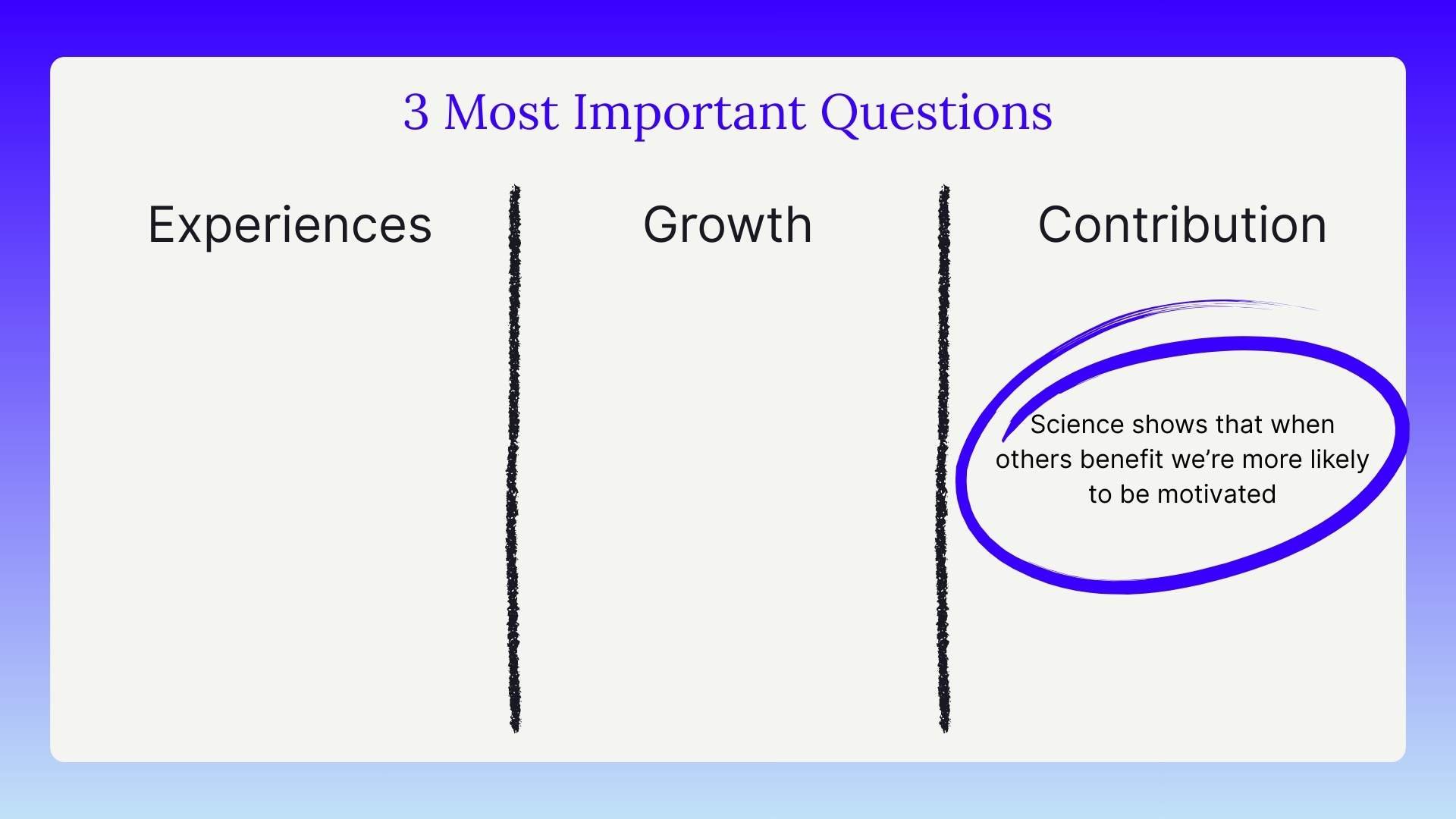
Look for patterns or overlaps in your answers. They often point to the themes that give your work and choices real energy.
You can do this exercise once, or revisit it quarterly. It works because it reconnects you with direction and purpose, which are two of the first things burnout erodes. If you are wondering how to prevent burnout, this is a great place to start.
Then, establish a minimalistic Morning Routine (No Phone, No Pressure)
The first few minutes of your morning set the tone for everything that follows. When you reach for your phone the moment you wake up, your nervous system gets flooded with information and small stressors before you have even taken a breath. It puts your brain into reaction mode instead of intention.
A morning routine does not need to be long or aesthetic. It just needs to create real estate, a small pocket of time that belongs entirely to you. When you protect even five minutes at the start of the day, you teach your body that safety and space are priorities.
Start resistance free. Choose something so simple that you cannot talk yourself out of it. The goal is not to perform a perfect ritual but to reclaim the first few minutes of awareness each day.
Here are a few easy ways to begin:
Step outside for a short walk or take your dog out before checking your phone.
Read a few pages of a book or write one line in a journal.
Repeat a calming mantra in the shower or take three conscious breaths.
Sit quietly with your coffee and let yourself fully arrive in the day.
Once this small habit becomes second nature, you can build from there. Extend the time, add reflection, or include movement. Start small. A consistent, resistance free morning is one of the simplest ways to restore a sense of control and calm.
And start a Gratitude Practice
Gratitude is one of the simplest yet most powerful tools I teach to my client who wonder how to prevent burnout. To reset your focus and calm your nervous system. When you name what is working, you help your brain register safety instead of constant threat. Over time, that shift changes how you experience stress and how quickly you recover from it.
This is not about forcing positivity or pretending everything is fine. It is about balance. The human mind is wired to notice problems first. Gratitude simply brings awareness back to what is steady, supportive, or quietly good.
A few prompts you can use:
What helped me today?
What felt easier than yesterday?
Who made my day a little lighter?
What moment felt calm or enjoyable?
Over time, this practice begins to rebuild a sense of safety and optimism that burnout often erodes. It reminds your system that even in demanding seasons, moments of ease still exist. Recognising them is how you begin to create more.
Sequential Habits: Layer These Over Time
Once you’ve completed your 3 MIQs and have implemented a small morning routine and gratitude practice in your day-to-day, you’re well on your way to feeling better. You can now think about implementing, one at a time, the following four habits.
Completing Your Stress Cycles
Your body has its own way of processing stress. Each time you experience pressure, conflict, or intensity, your nervous system activates to help you respond. But if that energy has no outlet, it stays stuck in the body. Over time, this creates tension, fatigue, and emotional heaviness that the mind alone cannot solve.
As Bessel van der Kolk explains in The Body Keeps the Score, unprocessed stress does not simply disappear. The body keeps a record of every unfinished stress response. That is why you can feel on edge even when nothing is wrong, or why small things trigger a big reaction. The body is trying to complete what it never got to finish.
Completing a stress cycle means giving your body a safe way to discharge that built-up energy so the system can return to balance. You are not getting rid of stress; you are closing the loop.
Here are a few ways to do it:
Move your body in any way that feels natural: walking, dancing, shaking out your hands, or stretching
Take slow, deliberate breaths and extend the exhale to signal safety
Laugh, cry, or sing. All are ways your body releases tension
Spend time in safe connection with another person or pet, since co-regulation calms the nervous system faster than isolation
What matters most is that the release feels genuine, not forced. Even two minutes of physical expression can help the body let go of the stress response and return to a baseline of calm. When you do this regularly, recovery becomes something you practice every day instead of something you wait for on weekends or holidays.
Developing Healthy Habits – Movement & Nutrition
When thinking about how to prevent burnout, you need to remember that your body is the foundation of your energy, focus, and resilience. When it is undernourished or dehydrated, your capacity to think clearly and manage stress drops sharply. Burnout recovery and prevention both start with the basics, not the complex routines that promise instant results, but the small, steady actions that support your system every day.
Start with hydration. Most people underestimate how much water their body actually needs to stay regulated. Keep it simple: a glass of water when you wake up, another with each meal, and a refill every few hours. It sounds small, but steady hydration keeps your brain alert and your mood more stable.
Limit alcohol when possible. It can seem like a way to relax, yet it interferes with deep sleep and amplifies next-day stress. Reducing it, even slightly, often makes an immediate difference in energy and focus.
Choose wholesome, balanced meals that nourish rather than deplete. Avoid extremes or restrictive plans. Focus on real food, steady blood sugar, and enough protein and fibre to sustain you through the day.

Move your body daily. It does not have to be intense or structured. A simple walk of about 8,000 steps a day can improve circulation, lower stress hormones, and clear mental fog. Combine that with some form of movement you genuinely enjoy, whether that is swimming, yoga, tennis, or dancing. The point is not performance. It is connection.
When you care for your body in these simple ways, you are not just preventing burnout. You are creating a physical foundation for emotional steadiness and mental clarity.
Sleep as a Strategy, Not an Afterthought
Sleep is not time lost. It is the system upgrade that keeps every other part of your life running. When you are sleep deprived, focus, mood, memory, and creativity all decline, no matter how motivated you are. Over time, chronic lack of rest becomes one of the strongest predictors of burnout. Without quality sleep, it’s hard to imagine how to prevent burnout effectively.
Treat sleep as something to plan, not something that happens if you finish everything else. Create a simple routine that helps your body recognise when it is time to slow down. Lower the lights, silence notifications, and give your mind a clear signal that the workday is over.
Aim for quality as much as quantity. A few small changes can make a big difference:
Avoid screens and bright light for 30 to 60 minutes before bed.
Keep your bedroom cool, dark, and free of clutter.
Try light stretching or deep breathing before getting into bed.
If your mind tends to race, keep a notebook nearby to empty out unfinished thoughts. The goal is not to fall asleep perfectly, but to create conditions where your body feels safe enough to rest.
Using the Reframing Exercise
When stress builds up, the mind can get stuck in a loop of worry and negative thinking. The Reframing Exercise helps you break that loop by turning stressful thoughts into clarity and empowered action. It trains your mind to see options instead of obstacles, and to focus on what you can influence rather than what you cannot.
This practice combines two powerful principles. First, it calms the nervous system so your body can leave fight-or-flight mode. Then, it uses structured reflection to shift perspective from fear to possibility.
How to do it:
Divide your page into two columns. Label the first one What’s Bothering Me and the second one My Empowered Response.
Brain dump everything that feels heavy. Work, relationships, money, world events, anything that is on your mind. Write without censoring or analysing.
Pause to breathe. Try a few rounds of box breathing: inhale for four seconds, hold for four, exhale for four, hold for four. This signals your body that you are safe and helps your mind clear.
Reframe each concern. For every item in the first column, write an empowered response in the second. Ask yourself:
What action can I take right now?
What can I learn from this situation?
If it is beyond my control, what perspective would help me feel more peaceful or grounded?
Examples:
This project deadline is impossible to meet → I will prioritise the key elements and communicate clearly about expectations.
I’m worried about my health results → I’ve done what I can. I’ll focus on nourishing myself while I wait.
This world event is upsetting → I will stay informed while protecting my emotional space.
Over time, this exercise becomes second nature. You begin to notice stressful thoughts as they arise and reframe them in real time, without needing to write them down. The goal is not to erase negative feelings but to process them in a way that restores perspective and choice.
When you shift from reaction to reflection, your mind stops feeding the stress cycle and starts supporting your clarity.
How to Prevent Burnout Without Overwhelm
Start small. Pick one habit and stay with it until it feels natural. Then add another.
These habits work best when layered gradually, not all at once. Trying to do everything at the same time defeats the purpose — you might even burn out from trying not to burn out.
Progress matters more than perfection. Consistency is what protects your energy.
What Burnout Support Looks Like at Holorise
It’s not about stopping everything: it’s about resetting your system
Burnout recovery does not always mean stepping away from your work or changing your life completely. It means helping your body and mind return to safety so you can function clearly again. At Holorise, burnout support focuses on restoring regulation, rebuilding energy, and creating patterns that keep stress from spiralling back.
The process meets you where you are
Whether you are already in burnout, approaching it, or simply trying to perform sustainably, the process adapts to your state. We combine tools such as Rapid Transformational Therapy (RTT) and Mindset & Performance Coaching and Holistic Health Coaching whenever they are the best approach for your goals. Each plan is shaped around your individual pace and needs, helping you recover safely and effectively.
The goal is sustainable capacity, not constant output
True recovery is not about pushing harder or achieving more. It is about learning to operate from calm steadiness rather than survival mode. The aim is a grounded, clear sense of capacity that supports both wellbeing and performance over time.
If you are beginning to recognise yourself in these patterns, you can explore how Holorise’s Burnout Support helps professionals recover and rebuild sustainably.
A Final Reflection
If you’re wondering how to prevent burnout, despite your very busy life, then there is hope. And burnout prevention is not about doing more. It is about leading yourself differently.
Each of these habits is a small act of awareness that helps you return to balance before exhaustion takes over. The work is not to fix yourself, but to understand what your system needs to stay steady.
Even a few of these changes, done consistently, can shift how you feel. They remind your body that safety is possible, and your mind that clarity is within reach.
Sustainable performance starts with presence, not pressure. The more you practise that, the more energy, focus, and calm you will have to give to the things that matter most.