Why Creating Habits Is So Hard (and How Rapid Transformational Therapy Can Help)
Many people believe that if they cannot stick to a habit, it means they lack discipline. They tell themselves they should be more motivated, more organised, or simply try harder. But the truth is, most habit struggles have very little to do with willpower.
Habits do not fail because people are weak. They fail because they are being created in the wrong way. To understand why, it helps to look at how the mind actually works.
In this blog, we do exactly that, and explore how Rapid Transformational Therapy (RTT) might help creating lasting habits.
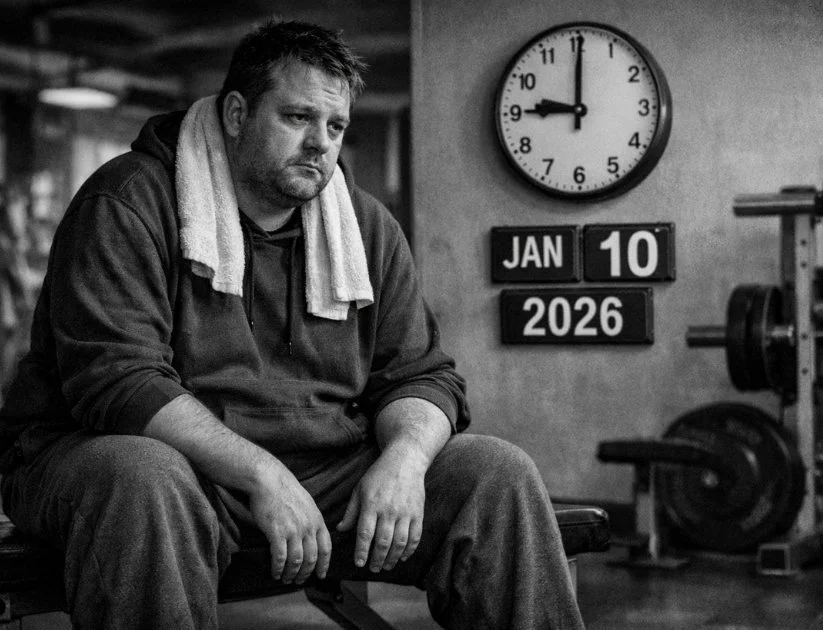
Why willpower rarely leads to lasting change
Willpower belongs to the conscious mind. This is the part of us that makes decisions, sets goals, and plans for the future. It is useful, but it is also limited.
The conscious mind tires easily, especially under stress, fatigue, or emotional pressure. This is why habits that rely on constant effort often work for a short time and then collapse when life becomes busy or challenging.
Habits themselves, however, do not live in the conscious mind. They live in the subconscious.
The subconscious mind is responsible for automatic behaviours, emotional responses, learned patterns, and identity. Once something is stored here, it runs without effort.
This is why brushing your teeth does not require motivation, and why certain behaviours happen almost without thinking.
The hidden reason habits feel like a struggle
When someone tries to build a habit using only willpower, they are often working against an existing subconscious pattern.
For example:
You may want to wake up earlier, but your subconscious associates mornings with stress or pressure
You may want to eat differently, but food is unconsciously linked to comfort or emotional relief
You may want to exercise, but movement is tied to past shame, failure, or comparison
You may want to be more confident, but confidence once led to criticism or rejection (this is especially prevalent for women!)
In these situations, part of the mind wants change, while another part is trying to protect you from a perceived threat.
This internal conflict creates resistance, procrastination, and self-sabotage.
From the outside, it can look like a lack of discipline. From the inside, it is a protective mechanism.
How habits are really formed
Habits form through repetition combined with emotional meaning.
When a behaviour feels safe, familiar, or rewarding, the subconscious adopts it. When a behaviour feels threatening, uncomfortable, or emotionally risky, the subconscious resists it.
This is why habits linked to identity tend to be the most stable.
If someone subconsciously believes:
“I am someone who always struggles”
“I do not follow through”
“I have to earn rest”
“Change is unsafe”
Then even simple habits can feel exhausting to maintain.
Trying to override these beliefs with willpower is possible, but it requires constant effort and usually does not last.
What makes Rapid Transformational Therapy different
Rapid Transformational Therapy works directly with the subconscious mind, where habits and beliefs are stored.
Rather than focusing only on behaviour, RTT aims to identify and resolve the root causes that make certain habits feel difficult or impossible.
This often involves:
Identifying early experiences where unhelpful beliefs were formed
Understanding the emotional meaning attached to a behaviour
Releasing outdated patterns that no longer serve the person
Updating the subconscious with healthier, more supportive beliefs
When these subconscious blocks are addressed, the resistance around a habit often reduces or disappears altogether.
Clients frequently report that behaviours they previously had to force begin to feel more neutral, or even natural. This is a key benefit of RTT.
The habit does not require the same level of effort because the internal conflict has been resolved.
Why RTT can make habit change easier
RTT does not rely on motivation, accountability, or pressure. Instead, it works by removing the subconscious reasons why a habit was difficult in the first place.
This can be especially helpful for people who say: “I know what to do, but I just cannot seem to do it consistently.”
In these cases, the issue is rarely a lack of knowledge… or motivation. It is usually an unresolved emotional association or belief that is operating below conscious awareness.
By working at this level, RTT helps create conditions where change feels safer and more achievable.
The role of habits after RTT
Once subconscious resistance has been reduced, habits can be introduced more gently and realistically.
Rather than relying on force, habits are built through:
Small, achievable actions
Consistency rather than intensity
Alignment with lifestyle and energy levels
Reinforcement of a new self-image
At this stage, habit-building becomes less about self-control and more about integration.
The behaviour begins to reflect who the person believes they are becoming, rather than something they have to push themselves to do.
Sustainable habits come from alignment, not pressure
Lasting habits are not created through punishment, guilt, or constant effort. They are created when behaviour aligns with subconscious beliefs, emotional safety, and identity.
Rapid Transformational Therapy helps by addressing the deeper layers that traditional habit advice often overlooks. When the subconscious mind is no longer resisting change, habits stop feeling like a battle. They become a natural extension of personal growth.
A final reflection
If you have struggled to maintain habits in the past, it may not be because you failed.
It may be because an old belief or emotional pattern was never addressed.
When the subconscious is included in the process, change becomes less about trying harder and more about removing what was in the way.
And that is where real, lasting habit change begins.